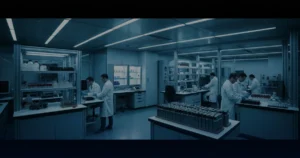
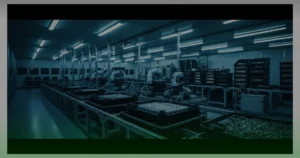
A new generation of hydrometallurgical recycling processes has pushed material recovery rates for lithium-ion EV batteries past the 99% threshold, according to independently audited results published by Redwood Materials and Li-Cycle Holdings in late 2025. The milestone dismantles one of the most persistent criticisms of electric vehicles — that their batteries would become an unmanageable waste stream — and establishes a foundation for a closed-loop battery supply chain in which nearly every atom of critical material is returned to production.
How 99% Recovery Is Achieved
Traditional pyrometallurgical recycling — smelting batteries at high temperatures — typically recovers cobalt, nickel, and copper but loses lithium, manganese, and graphite as slag or off-gas. Recovery rates for pyrometallurgical processes generally hover around 50%–60% of total material value.
The newer hydrometallurgical approach used by Redwood Materials, Li-Cycle, and several Chinese operators including Brunp Recycling (a CATL subsidiary) takes a different path. Batteries are first mechanically shredded in an inert atmosphere to produce “black mass” — a fine powder containing the cathode and anode materials. The black mass is then dissolved in a series of acidic leaching solutions, and individual metals are selectively precipitated out using pH adjustment, solvent extraction, and ion-exchange chromatography.
Redwood Materials reported that its process recovers 99.2% of nickel, 99.4% of cobalt, 99.1% of lithium, and 99.5% of copper from NMC and NCA battery chemistries. Li-Cycle disclosed comparable figures from its Rochester, New York hub, which began commercial operations in early 2025 with an annual processing capacity of 35,000 metric tons of battery material.
- Nickel recovery: 99.2% (Redwood Materials, third-party audited)
- Cobalt recovery: 99.4%
- Lithium recovery: 99.1% — a critical improvement over pyrometallurgical methods
- Copper recovery: 99.5%
- Graphite recovery: >95%, with purification to battery-grade quality
The Economics of Recycling
High recovery rates alone do not guarantee a viable recycling industry — the economics must also work. Here, the numbers are increasingly favorable. Redwood Materials estimates that cathode active material produced from recycled feedstock costs 20%–30% less than equivalent virgin material, primarily because the energy-intensive mining and chemical conversion steps are eliminated.
The value proposition is especially strong for cobalt and nickel, which together account for the majority of NMC cathode cost. Even for LFP batteries, which contain no cobalt or nickel, lithium and copper recovery provides meaningful economic returns. Redwood Materials has begun recycling LFP packs from Tesla and BYD vehicles, recovering lithium carbonate at purities exceeding 99.5% — sufficient for direct re-use in new cathode synthesis.
“The recycling question for EV batteries has been answered. We can recover virtually everything. The remaining challenge is logistics — building collection networks and processing capacity fast enough to handle the wave of end-of-life batteries that will arrive in the late 2020s and 2030s.” — JB Straubel, founder and CEO, Redwood Materials
Regulatory Tailwinds and Scale-Up
Governments are accelerating the push toward battery recycling mandates. The European Union’s Battery Regulation, which entered force in 2024, requires that by 2031, new batteries sold in Europe must contain minimum percentages of recycled content: 16% for cobalt, 6% for lithium, and 6% for nickel. China has implemented a battery traceability system that tracks cells from production through end-of-life, and South Korea mandated recycling for all EV batteries retired after 2025.
Global battery recycling capacity will reach 600,000 metric tons per year by 2030, according to Circular Energy Storage Research. That figure will need to grow substantially as the first major wave of EV batteries — those installed in vehicles sold between 2018 and 2022 — begins reaching end-of-life in the early 2030s. The industry’s ability to scale collection infrastructure and processing facilities in pace with retirement volumes will determine whether the 99% recovery rates demonstrated in the laboratory become the norm across the global fleet.