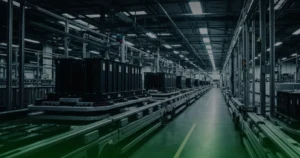
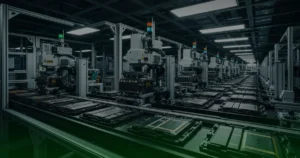
The battery industry's challenge in 2026 has shifted from demonstrating next-generation chemistries in the laboratory to manufacturing them at scale. Solid-state cells, condensed matter batteries, and silicon-dominant anodes have all proven their performance in controlled environments. The question now is whether the industry can produce them at the volume, consistency, and cost required for mass-market electric vehicles. The answer will determine whether 1,000-kilometre range EVs remain a luxury-segment novelty or become the new baseline for mainstream transportation.
Manufacturing Scale Challenges
Every new battery chemistry introduces manufacturing challenges that existing production lines were not designed to address. Solid-state batteries require handling of moisture-sensitive sulfide electrolytes in atmospheres with less than 1 ppm water vapour, orders of magnitude drier than conventional cell manufacturing environments. Silicon anodes expand by up to 300% during charging, requiring new electrode coating techniques that can accommodate this volume change without delamination or particle fracture. Condensed matter cells demand precise control of the semi-solid electrolyte's viscosity during injection, a process that has no analogue in conventional liquid electrolyte filling.
These are not theoretical concerns. Samsung SDI's prototype solid-state line in Cheonan has achieved a cell yield rate of only 65%, compared to the 95%+ yields that are standard in mature lithium-ion production. Every percentage point of yield improvement translates directly to unit cost reduction, and the gap between 65% and 95% represents a cost premium that would make solid-state cells uncompetitive for anything but the highest-margin vehicle segments.
“We can make a solid-state cell that outperforms anything on the market. We can make a hundred of them. The question is whether we can make a hundred million of them at a cost that makes commercial sense. That is the only question that matters now.”
Dry Electrode Coating: The Process Revolution
One of the most consequential manufacturing innovations of 2026 is the adoption of dry electrode coating. Conventional electrode manufacturing involves coating metal foils with a slurry of active material, binder, and solvent, then drying the coated electrode in ovens that can be 100 metres long. The drying step consumes approximately 40% of the total energy used in cell manufacturing and requires significant capital investment in oven infrastructure and solvent recovery systems.
Dry electrode coating eliminates the solvent entirely. Active material powder is mixed with a small amount of PTFE binder and calendered directly onto the current collector foil. The process reduces energy consumption by 50-70%, eliminates toxic NMP solvent handling, and reduces the physical footprint of electrode production lines by approximately 60%. Tesla acquired the technology through its purchase of Maxwell Technologies and has been developing it since 2019. In 2026, several additional companies have demonstrated dry coating at pilot scale:
- LG Energy Solution has qualified dry-coated cathodes for its next-generation 4680 cells, targeting volume production in H2 2027
- ProLogium is using a modified dry process for its solid-state cell electrodes, achieving coating speeds of 80 metres per minute
- Freyr Battery has adopted dry coating as a core element of its "SemiSolid" production process at its Giga Arctic facility in Norway
- BYD has filed 14 patents related to dry electrode processing and is believed to be integrating the technology into its Blade 2.0 production lines
Gigafactory Yield Optimisation
As the industry scales, yield optimisation has become as important as chemistry innovation. A gigafactory producing 50 GWh of cells annually at 92% yield generates 4 GWh of scrap, enough material for approximately 55,000 vehicles. At the current cost of cathode active materials, this scrap represents over $200 million in annual waste.
The industry is deploying several approaches to improve yields. Inline quality inspection using machine vision and X-ray imaging can identify defective cells before they are assembled into modules, preventing the costly recall of finished products. Statistical process control systems monitor hundreds of process parameters in real time, detecting drift before it produces out-of-specification cells. And digital twin simulations allow manufacturers to optimise process parameters virtually before implementing changes on the physical production line.
CATL has achieved the industry's highest reported yield rates, consistently above 97% across its Ningde and Liyang facilities. The company attributes this performance to its "extreme manufacturing" programme, which applies semiconductor-grade process control to battery production, including cleanroom environments, automated material handling, and real-time defect classification using AI-powered inspection systems.
Capacity Expansion and Workforce Gaps
The global battery manufacturing capacity expansion continues at an unprecedented pace. Announced capacity additions for 2026-2028 total approximately 3 TWh, led by CATL (600 GWh), BYD (400 GWh), LG Energy Solution (300 GWh), and Samsung SDI (200 GWh). North American capacity is growing rapidly, with the Inflation Reduction Act having catalysed over $80 billion in announced investments since its passage in 2022.
However, the pace of capacity expansion has created a significant workforce challenge. The battery manufacturing sector needs an estimated 300,000 additional skilled workers globally by 2028, including electrochemists, process engineers, equipment technicians, and quality assurance specialists. Training programmes are lagging demand, and the competition for experienced battery manufacturing talent has driven salary inflation of 15-25% annually in key markets.
The production pivot is the defining challenge of the battery industry in 2026. The chemistry breakthroughs are real. The capital is committed. The factories are under construction. But the gap between laboratory performance and factory-floor reality remains wide, and closing it will require the kind of relentless process engineering discipline that separates successful manufacturers from those that announce capacity they never deliver. The 1,000-kilometre EV is coming to the factory floor. The question is which factories will be ready.